Why OSHA's Safety Champions Program Could Transform Your Rig's Safety Culture
Most drilling companies run safety like it's a bureaucracy. You get the mandatory training, sign the acknowledgment, and move on. The crew nods along, but nothing changes. Why? Because the message isn't coming from someone who understands what it's like to be standing on that rig floor at 3 AM trying to get a connection right while managing pressure.
Real safety culture comes from peers. It comes from the guy two spots over who's been on rigs longer than most, who people naturally listen to, and who gives a damn about making sure everyone goes home.
What the Safety Champions Program Actually Does
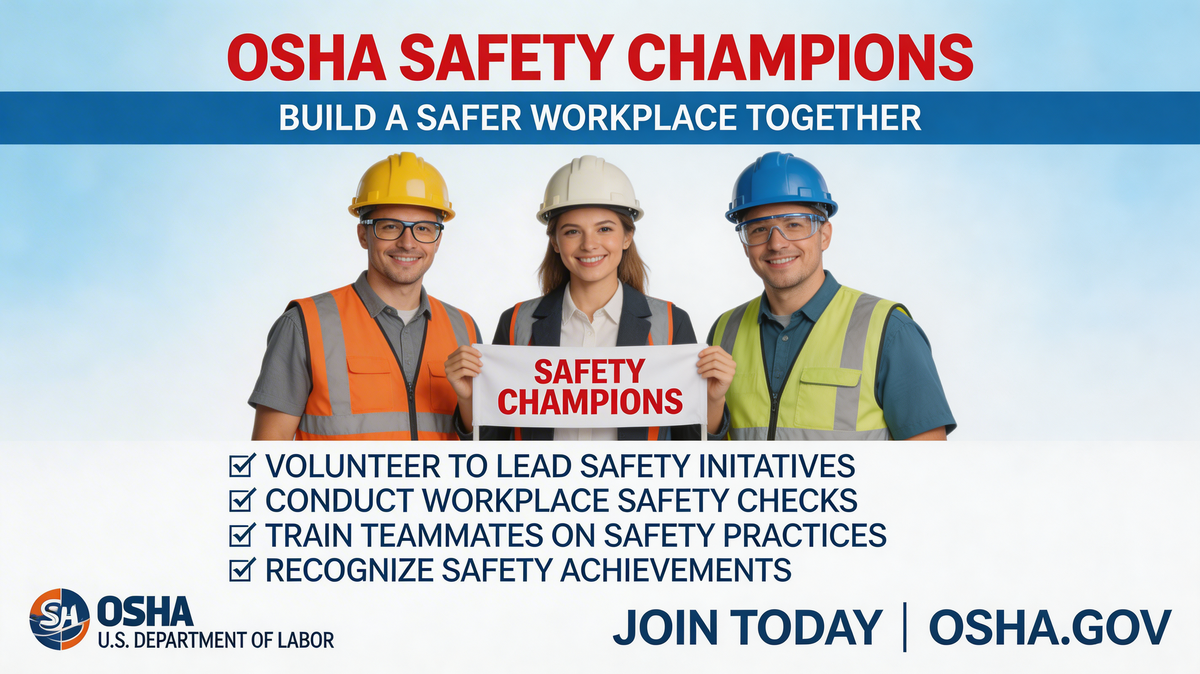
OSHA's Safety Champions Program gives you a framework to identify, train, and formalize those natural safety leaders already embedded in your crew. It's structured, it's recognized at the federal level, and most importantly—it puts authority behind people who already have credibility on the rig floor.
Instead of imposing safety leadership from above, you're developing it from within. You're taking the driller who mentors younger crew, the toolpusher who catches problems before they become incidents, or the crane operator with an obsessive attention to detail, and giving them official standing to lead safety initiatives.
Finding Your Safety Champions
Look at your crew. Who do people actually listen to? Not who has the title—who do people actually follow? Who asks questions about procedures before moving forward? Who catches something that's off and speaks up? Are you looking at that person as a blocker or liability? Well think again.
Those people are already leading. The Safety Champions Program just formalizes what's already happening organically.
On a multi-rig operation, you might identify one or two leaders per location—someone on each tour, ideally—who can champion safety practices, coordinate toolbox talks, report hazards with real credibility, and catch drift before procedures become shortcuts.
Sustaining It Across Multiple Locations
The real value shows up when you scale it. One safety champion per rig location becomes a network. They communicate upward to management with real data from the floor. They communicate sideways to other locations, sharing what's working. They communicate downward to their crews in language people understand.
This creates accountability that actually means something because it's coming from peers, not compliance officers.
Measure What Matters
Success isn't just lower incident rates—though that matters. Look at near-miss reporting. When crews feel safe admitting mistakes, you catch problems before they become injuries. Look at crew retention. When people feel genuinely safe and respected, they stay. Look at how quickly new procedures actually get adopted on the floor.
The Safety Champions Program gives HSE managers a tool to build real safety culture instead of just enforcing policies. It turns safety from something imposed into something the crew owns.
That's how you change what actually happens on the rig floor.