Think Safer...faster: Incorporating the Hierarchy of Controls in your daily OODA-loop
Not all safety environments are the same. In oil and gas drilling and exploration, speed and efficiency are a big part of the job. Even on sites with a strong safety culture, the Hierarchy of Controls is often “reinterpreted” in daily decisions to favor operational speed over thoughtful, measured risk reduction.
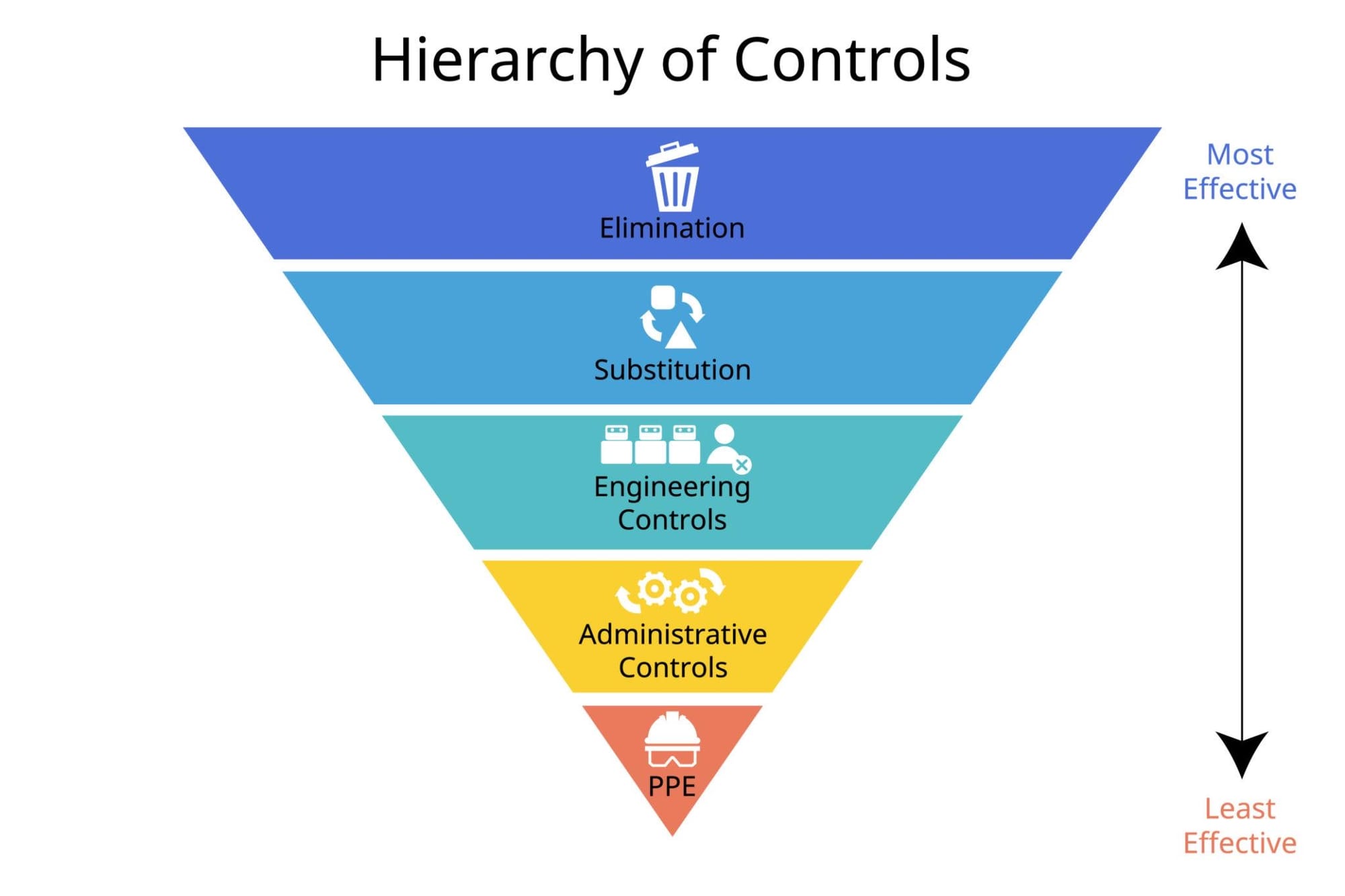
As a refresher let's define the Hierarchy of Controls. The Hierarchy of Controls is a safety framework used to choose the most effective way to control workplace hazards, starting with eliminating the hazard and ending with personal protective equipment as the last line of defense.
The Hierarchy of Controls ranks risk-reduction methods from most effective to least effective: elimination of the hazard, substitution of the process or material associated with it, engineering controls that reduce exposure, administrative controls that rely on procedures or information to limit exposure, and finally personal protective equipment, which serves as the last line of defense.
By its nature, the Hierarchy of Controls is procedural and relatively static in how it is applied. It works well for managing high-level, fixed worksite risks and for planned work. But in fast-changing, dynamic situations, strict application of the HoC often breaks down. As a result, frontline workers frequently default to PPE as the first—and sometimes only—control measure they consider.
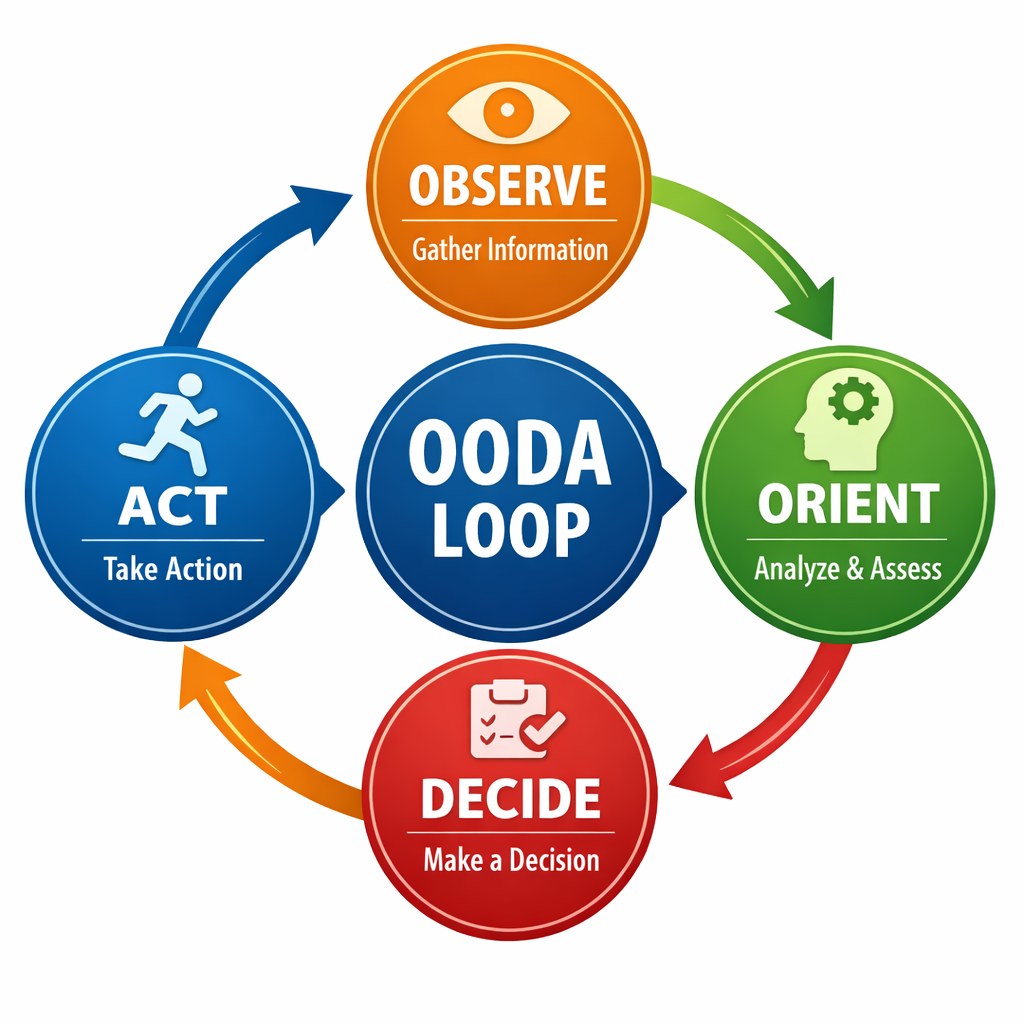
Addressing immediate hazards and a dynamically changing tactical environment is a core tenet of the Observe, Orient, Decide, Act (OODA) loop. The OODA Loop is a recurring decision cycle of Observe, Orient, Decide, and Act. It was developed by U.S. Air Force Colonel John Boyd as a model for making decisions and acting effectively in changing combat conditions.
The strength of the OODA loop is that it transforms responses in a dynamic environment from re-active to pro-active through repeated applications of the cycle. It effectivley moves a situation from chaotic and uncontrolled to one that is shaped and controlled because decision-making outpaces the ability of the opponent to respond.
This is inherently useful when dealing with hazards as the loop becomes a proactive method for anticipating change, adjusting early, and acting before conditions worsen.
The Hierarchy of Controls excels for safety management in a controlled and static decision-making environment while the OODA loop excels in informing rapid decision-making within a dynamically changing environment.
Fusing both decision-making models together can create a potent change to tactical application of safety culture in the workplace.
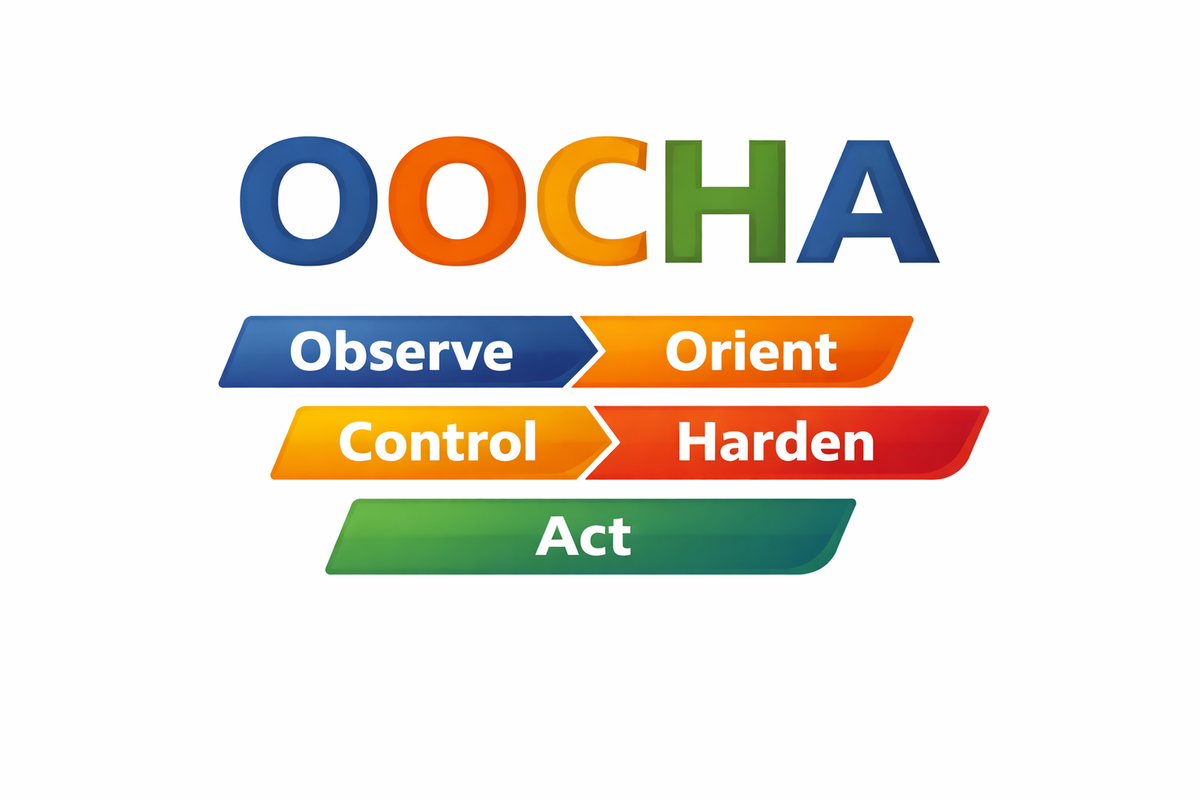
A useful way to fuse the OODA Loop with the Hierarchy of Controls is to treat the OODA Loop as the tempo of decision-making and the Hierarchy of Controls as the quality standard for the response. In this fused model, crews do not simply observe change, orient to risk, decide quickly, and act; they pause long enough to ask what level of control is actually being applied and whether the hazard can be eliminated, substituted, or engineered out before relying on procedures or PPE. One possible name for this fusion is OOCHA: Observe, Orient, Control, Harden, Act. The model keeps the speed and adaptability of the OODA Loop while forcing safety decisions through a control-effectiveness filter, helping teams respond to changing conditions with measures that are not only fast, but stronger and more reliable.
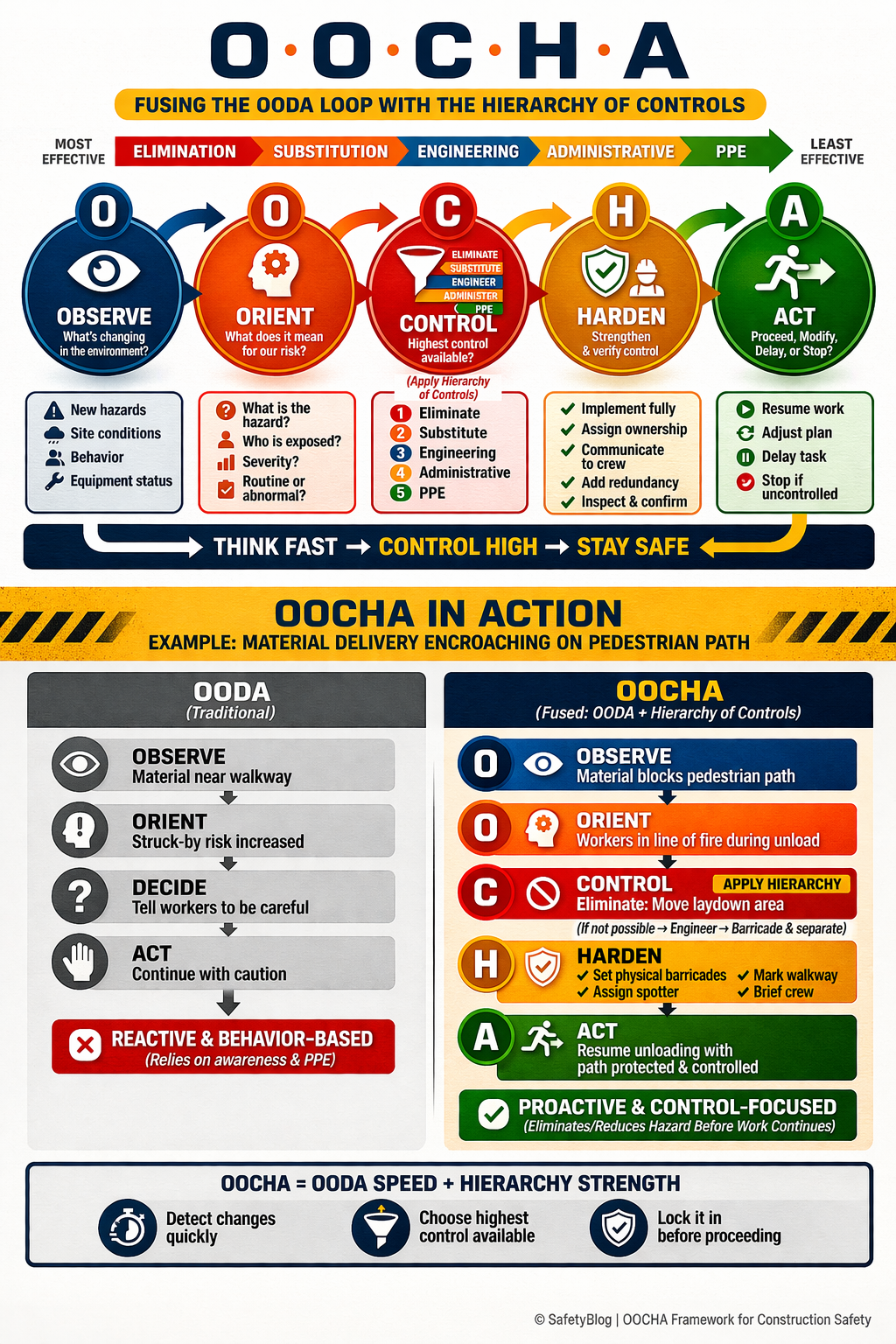
By fusing the speed of the OODA Loop with the discipline of the Hierarchy of Controls, OOCHA offers a practical way to make safety decisions that are both faster and better. Instead of letting dynamic conditions push crews toward the easiest or most familiar control, it creates a habit of responding at tempo while still prioritizing the strongest available safeguard. In high-risk environments like drilling and exploration, that shift matters. Safety is not just about reacting to hazards once they appear, but about shaping the work so hazards are controlled before they become incidents.
References:
Occupational Safety and Health Administration (OSHA). Identifying Hazard Control Options: The Hierarchy of Controls. U.S. Department of Labor.
National Institute for Occupational Safety and Health (NIOSH). Hierarchy of Controls. Centers for Disease Control and Prevention.
U.S. Air Force, Optimizing the Data Loop. Airman Magazine.
U.S. Air Force. AFSO21 Playbook.
U.S. Air Force Doctrine Publication 3-0.1, Command and Control.