NFPA 70E on the Rig Floor: Electrical Safety Beyond the Classroom
NFPA 70E training teaches electrical safety principles. But drilling rigs present specific electrical hazards that generic industrial training doesn't address. The gap between classroom knowledge and rig floor application is where incidents happen.
Standard NFPA 70E training covers the fundamentals. What it doesn't always emphasize are the unique hazards of drilling operations—overhead power lines near tall equipment, exposed electrical connections in harsh environments, and the combination of electrical and flammable atmospheres that drilling sites present.
Applying NFPA 70E on a rig requires understanding both the standard and the specific conditions where you work.
Hazards Specific to Drilling Operations
Overhead power lines present a serious hazard on drilling sites. Because rig equipment is tall, contact with high-voltage power lines is a constant risk. When metal equipment such as a crane or drilling line touches or nears a power line, electricity flows through the equipment to ground. Workers near the equipment can receive a severe shock from step or touch potential.
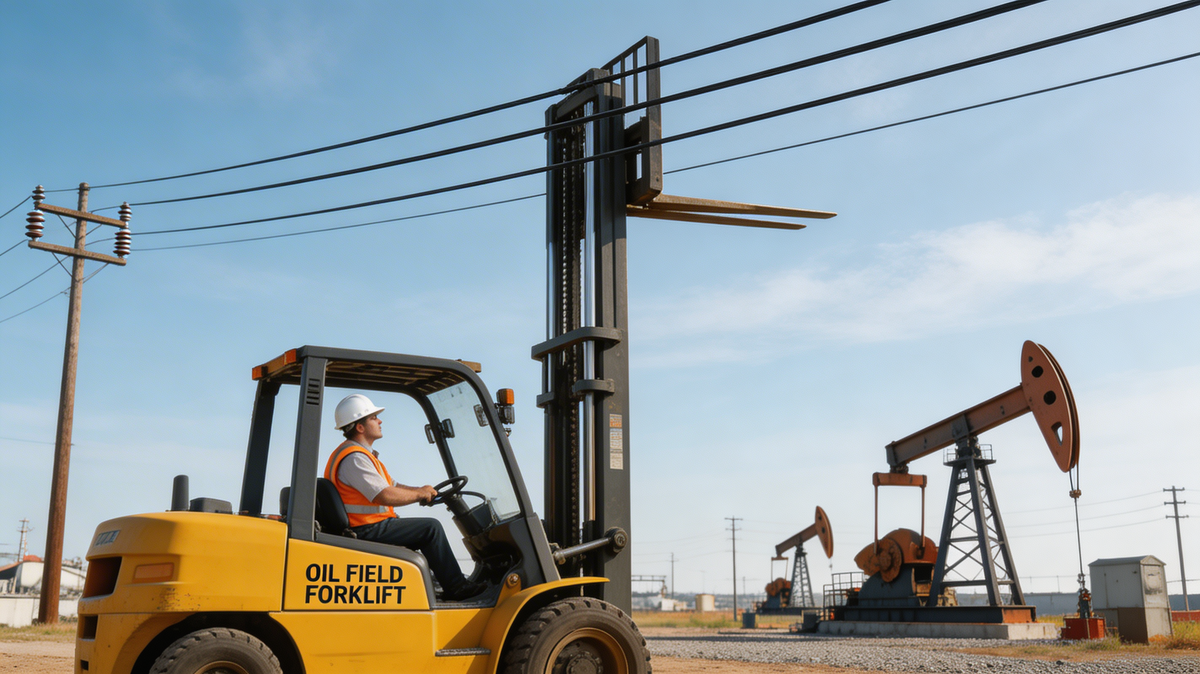
Forklifts and other material-handling equipment present a particular concern during rig operations. During rigging up and rigging down, equipment may be positioned or transported using forklifts with raised loads. The height of a raised forklift load can make contact with overhead power lines feasible. Unlike crane operators who are isolated inside equipment, forklift operators and ground personnel surrounding the equipment during loading or positioning are directly exposed to shock hazard if contact occurs. OSHA requires that employees using industrial trucks under overhead power lines must be trained on the electrical hazards involved.
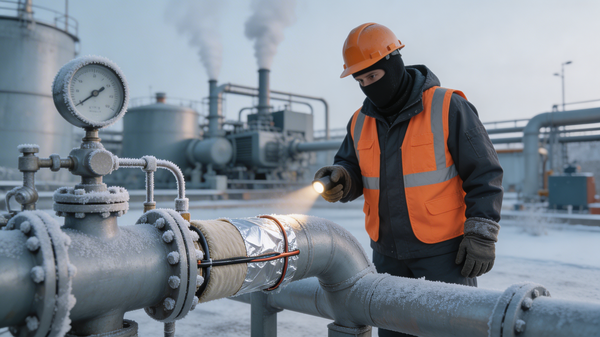
Exposed electrical connections are another concern. Drilling rigs operate in mud, corrosive environments, and high-vibration conditions. Electrical equipment on rigs must handle these conditions, but degradation happens. Damaged insulation, corroded connections, and loose components create shock and arc flash hazards that standard facilities don't typically face.
Qualification and Authority
Only qualified employees can perform work on energized electrical equipment. A qualified person has demonstrated skills and knowledge related to electrical equipment and has received safety training to identify hazards and reduce risk. On a drilling rig, this matters because not all electricians or technicians meet this definition.
Before any electrical work occurs, the employer must determine whether work can be de-energized. This is the first control measure in NFPA 70E. If work must occur on live equipment, a written permit is required, along with a documented safety plan.
Arc Flash and Incident Energy
NFPA 70E requires employers to document the incident energy exposure when workers perform tasks within a flash protection boundary. Incident energy is the thermal energy from an electrical arc at a specific distance from the source.
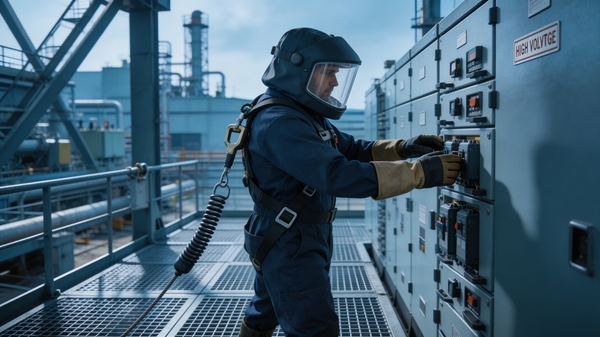
On drilling rigs, arc flash hazards exist around high-energy electrical systems. Arc flash assessment for rig electrical systems should follow NFPA 70E standards to identify:
- Flash protection boundaries around equipment
- Required PPE for different voltage levels and incident energy values
- Safe approach distances for different worker roles
PPE and Protective Equipment
NFPA 70E establishes PPE categories with minimum arc ratings. Flame-resistant (FR) clothing must have an arc thermal performance value (ATPV) or cal/cm² rating greater than the hazard exposure.
On drilling rigs, many operators require FR clothing to be worn at all times on the pad, even outside electrical work. This reflects the combined hazard of electrical work, flammable atmospheres, and high-temperature environments.
Proper face and hand protection for electrical work requires finding suppliers—generic FR shirts and pants from retail stores meet basic standards but may not provide the specific protection electrical work requires.
Documentation and Site-Specific Procedures
NFPA 70E requires employers to document and implement an electrical safety program that directs employee activities for different voltages, energy levels, and circuit conditions. This must include:
- A lockout/tagout program with documented procedures and regular audits
- Job safety planning that identifies electrical hazards and control methods
- Job briefings before any energized work begins
- Regular inspection and maintenance of electrical systems
On a drilling rig, this documentation becomes a site-specific electrical safety procedure. It can't be generic—it must address the specific equipment, voltages, and hazards present at that location.
The Gap Between Training and Execution
Classroom training teaches NFPA 70E principles. Rig floor execution requires understanding how those principles apply when working on drawworks, rotary equipment, BOP control systems, and the wide range of electrical systems that drilling rigs depend on.
The standard provides the framework. Your site-specific procedures provide the application. The difference between them is where electrical safety either works or fails.
Sources
- Rozel - Oil Field Electrical Safety https://www.70econsultants.com/oil-field-electrical-safety/
- Source for: OSHA requirements for FR clothing on oil/gas drilling and servicing operations; overhead power lines as shock hazard on rigs; step and touch potential risk; definition of qualified employees; administrative controls and procedures reducing error and accident rates
- Black Stallion - NFPA 70E Electrical Safety https://www.blackstallion.com/resource-hub/industry-standards/nfpa-70e-electrical-safety-in-the-workplace.html
- Source for: NFPA 70E requirement to document incident energy exposure when workers perform tasks within flash protection boundary; NFPA 70E including four PPE categories with arc ratings (ATPV or cal/cm²)
- BIC Magazine - NFPA 70E Standards Save Lives, Mitigate Electrical Hazards https://www.bicmagazine.com/departments/hse/nfpa-70er-standards-save-lives-mitigate-electrical-hazards/
- Source for: NFPA 70E requirement for employers to document and implement electrical safety program; requirements include LOTO audit, job safety planning, job briefing, and hierarchy of risk control methods (elimination, substitution, engineering controls, awareness, administrative controls, PPE)
- VB Engineering - Arc Flash Risk Assessment for Oil Rigs https://www.vbengg.com/arc-flash-risk-assessment-for-oil-rigs.html
- Source for: Arc flash risk assessment for oil rigs should be performed per NFPA 70E standards; assessment identifies flash protection boundaries, recommended PPE, and approach boundaries
- NFPA 70E - Electrical Safety Foundation International https://www.esfi.org/workplace-safety/industry-codes-regulations/nfpa-70e/
- Source for: NFPA 70E is the Standard for Electrical Safety in the Workplace addressing electrical safety requirements for employee workplaces during installation, operation, maintenance, and demolition of electrical equipment
- OSHA eTool - Oil and Gas Well Drilling and Servicing (Drilling - Rigging Up) https://www.osha.gov/etools/oil-and-gas/drilling/rigging-up
- Source for: During rigging up, equipment may be handled and set with crane, rig up trucks, or forklift; overhead hazards such as high voltage power lines may be present
- OSHA - Powered Industrial Trucks - Forklifts https://www.osha.gov/powered-industrial-trucks/loading-unloading
- Source for: Employees using industrial trucks under overhead lines must be trained on the electrical hazards involved