Lockout Program Crackdown: Why OSHA Is Hammering Energy Companies and How to Fix Yours
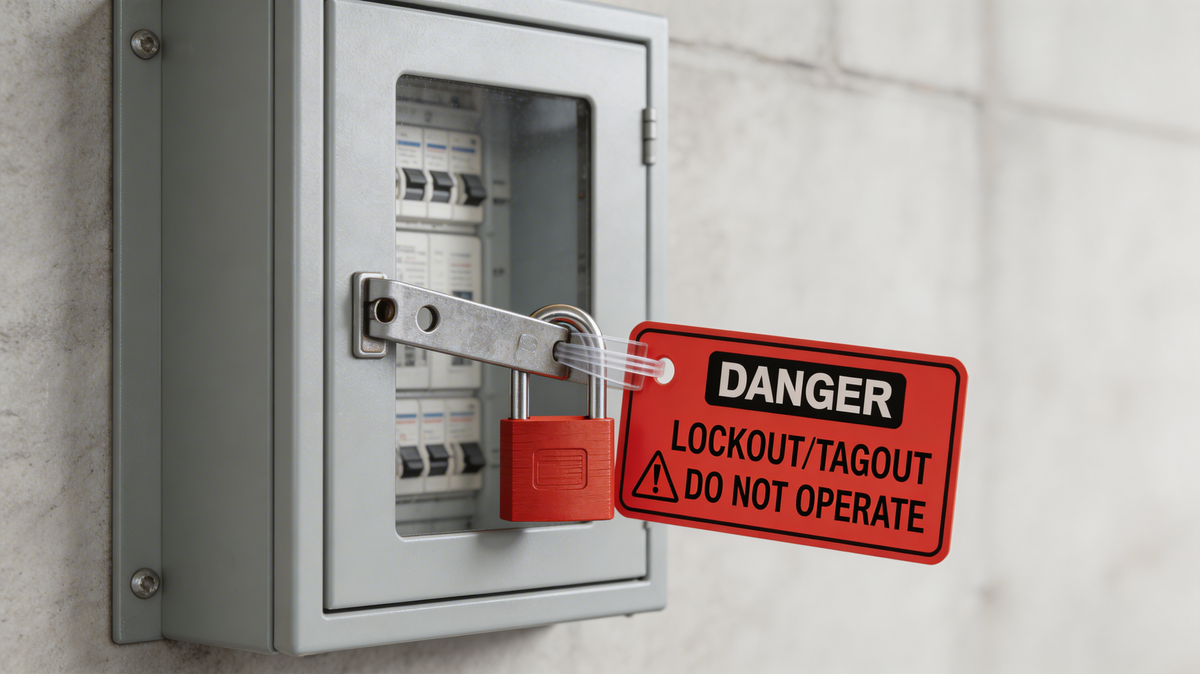
Control of Hazardous Energy — commonly known as Lockout/Tagout (LOTO) — ranked fifth on OSHA's (Occupational Safety and Health Administration's) most-cited violations list in 2024, with 2,443 citations issued across all industries. In the oil and gas sector, LOTO enforcement is more complicated than in most industries, and that complexity is exactly where citations originate.
Where OSHA's LOTO Standard Actually Applies in Oil and Gas
OSHA's LOTO standard, 29 CFR 1910.147, explicitly carves out oil and gas well drilling and servicing operations from its scope. That exemption does not extend to production facilities, surface equipment, or any maintenance operations that fall under general industry coverage. Separator systems, pump stations, compressor packages, and electrical systems on production sites are covered. For drilling and servicing operations where 1910.147 doesn't technically apply, OSHA can still pursue energy isolation hazards under Section 5(a)(1) of the Occupational Safety and Health Act — the General Duty Clause — when a company's program is visibly deficient or an incident occurs. Knowing the carve-out exists and assuming it provides full protection are two different things.
Why Instance-by-Instance Citations Are Raising the Stakes
In 2023, OSHA expanded guidance giving regional administrators authority to issue instance-by-instance citations for LOTO violations. Previously, multiple LOTO deficiencies found during an inspection could be grouped into a single citation. Under the current guidance, each deficiency can be cited separately. A single inspection finding five equipment-specific procedure gaps is now five citations rather than one. Penalty exposure multiplies accordingly.
Common Program Gaps That Trigger Citations
Generic procedures are the most frequently cited LOTO deficiency. A single procedure titled "pumps" that covers five different pump models with different energy sources and isolation points does not meet the standard. OSHA requires equipment-specific written procedures that identify every energy source, its type and magnitude, and the exact steps to isolate and verify de-energization for that specific piece of equipment.
Other common gaps include:
- Tagout-only programs on equipment that can physically accept a lock — OSHA requires a lock wherever lockout is physically possible; tagout-only is only permitted when the equipment cannot accept a lockout device
- Missing annual periodic inspections of energy control procedures
- Inadequate training documentation for authorized and affected employees
- No group lockout procedure for multi-crew maintenance operations
LOTO Challenges Specific to Oilfield Equipment
Blowout Preventer (BOP) systems present a textbook example of complex energy isolation. A BOP stack under pressure has both hydraulic and pneumatic energy sources in addition to any electrical control systems. Properly locking out a BOP for maintenance means identifying and isolating all stored energy — hydraulic accumulator pressure, control line pressure, and any electrical interlocks — not just closing the nearest valve. A procedure that only addresses one energy type on a multi-source system is an incomplete procedure, and an incomplete procedure is a citation.
Drawworks, top drives, mud pumps, and rotating equipment on the rig floor present similar challenges. Any maintenance performed on these systems requires equipment-specific written procedures that crews have been trained on and that have been periodically inspected and documented.
Quick Program Audit for Your Next Shift
Pull three equipment-specific LOTO procedures and check each one against this list:
- Does it identify every energy source by type and magnitude?
- Does it list every isolation point in sequence?
- Does it include a verification step to confirm zero energy state before work begins?
- Is there a current annual inspection on file for this procedure?
- Have authorized employees on your current crew been trained on it and documented?
Any "no" answer is a gap. Address it through your Health, Safety and Environment (HSE) coordinator before the next maintenance window, not after an inspector finds it first.
Sources
- OSHA 1910.147 — Control of Hazardous Energy (Lockout/Tagout), including scope/application and oil and gas carve-out: https://www.osha.gov/laws-regs/regulations/standardnumber/1910/1910.147
- OSHA Oil and Gas Extraction — Standards overview confirming 29 CFR 1910 applicability and General Duty Clause: https://www.osha.gov/oil-and-gas-extraction/standards
- OSHA critical updates — instance-by-instance citation guidance for LOTO (2023): https://www.oshalegal.com/osha-critical-updates-for-2023-2024/
- OSHA Top 10 FY2024 — LOTO ranked #5, 2,443 citations: https://safetypartnersinc.com/top-10-osha-violations-for-2024/
- Sentry Road — LOTO guide, generic procedures as top citation trigger: https://home.sentryroad.com/blog/lockout-tagout-guide
- Inspired by: Ally Safety — OSHA Is Citing Lockout Programs Like Crazy! (YouTube): https://www.youtube.com/watch?v=F1gh7px8znE