Ladder Injuries on Drilling Sites: A-Frame Setup That Prevents Them
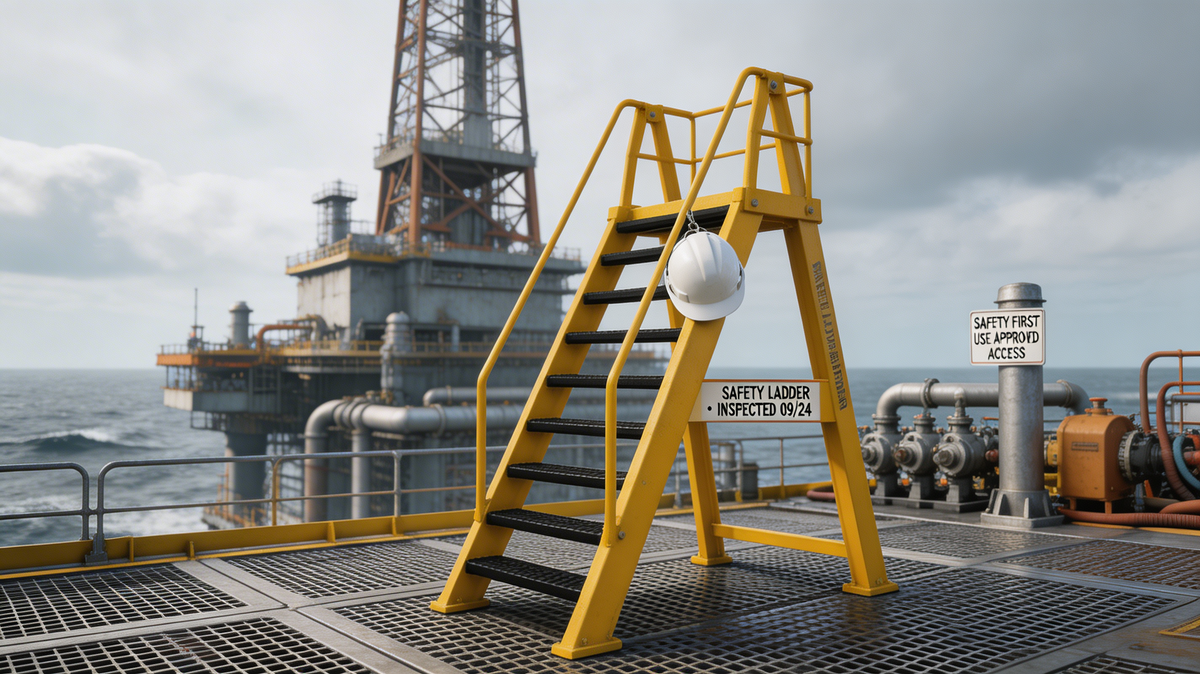
A ladder looks simple. It's just aluminum and some rungs. But on a drilling site, improper ladder setup is one of the most common sources of serious injuries.
A-frame ladder failures result in injuries quickly. Someone opens the ladder but doesn't lock the spreader bar all the way. The ladder collapses under their weight. Or they overreach, lose their grip, and fall sideways off the frame. Or they set it on uneven ground and it rocks when they step up.
The difference between safety and an injury is how the ladder is set up.
Spreader Bar Locked All the Way
Remember: when you open an A-frame ladder on a rig, that spreader bar gets locked. Fully locked. Not just resting. Not good enough. All the way.
Most people don't. They crack it open, set it down, and start climbing. Takes an extra second to lock it, but that second is the difference. A ladder that's not fully locked will collapse or flex when you put weight on it. You don't get a second chance to fix it.
Additionally make sure you have someone that can support the ladder by holding it's legs firmly down and in place. This person's job is NOT to hold or handle your tools- their ONLY job is to keep the ladder stable for you.
Additionally, depending on how tall the ladder is. A safety harness may need to be worn and done so according to the rules discussed in the OSHA 6 Foot rule post.
Drilling Sites have unique hazards
Construction sites have flat concrete pads. Rig sites have mud, gravel, uneven ground, and wind that doesn't stop. Your A-frame isn't sitting on perfect ground. It's sinking into mud or rocking on loose rock. The wind is pushing it. Equipment is vibrating nearby.
This is why a fully locked spreader bar and person acting as a weight brace are crucial to ladder operations on a drilling site.
Setup That Actually Works
Before you climb:
Check the ground. Is it level? If mud, is it firm enough to hold weight without sinking? If uneven, find solid ground or use shims. Never set an A-frame on a slope and trust it to stay put.
Lock the spreader bar all the way. Every single time. Fully locked. If it doesn't lock solid, the ladder is compromised—don't use it.
Keep your body in the frame. Don't reach out past the side rails. That's how people fall off A-frames. If you have to reach more than an arm's length, move the ladder. It takes 30 seconds. A fall takes forever.
Never use the top step. That's for folding and storage, not for climbing. Use the step below it.
Three points of contact. Two hands and one foot, or two feet and one hand. Every move. Don't carry loads up a ladder. Send them up separately or use a rope.
Secure it in wind. On a rig with wind pushing, tie the top of the A-frame to something solid. Wind can blow a ladder over even when it's locked properly.
Daily inspection. Before the crew starts, someone checks every ladder on the site. Bent frame, cracked hinges, loose spreader bar—anything compromised gets tagged and pulled out of service. No exceptions.
Common Causes of A-Frame Ladder Injuries
A-frame incidents on drilling sites result in injuries due to:
- Spreader bar not fully locked, causing collapse and falls
- Overreaching beyond the side rails, tipping the ladder sideways
- Setting the ladder on uneven or slippery ground that rocks during use
- Standing on the very top step
- Wind pushing an unsecured ladder over
All of these are preventable with proper setup and inspection.
Establish the Standard
Effective ladder safety on drilling sites requires consistent application of setup protocols to prevent injuries. Every time a ladder is used, the same steps apply, just like PPE requirements.
Lock the spreader bar. Check the ground. Keep in the frame. Three points of contact. Secure it against wind.
This is what prevents ladder injuries and ensures crew safety.