How OSHA's New Small Business Penalty Guidelines Affect Independent Drilling Contractors
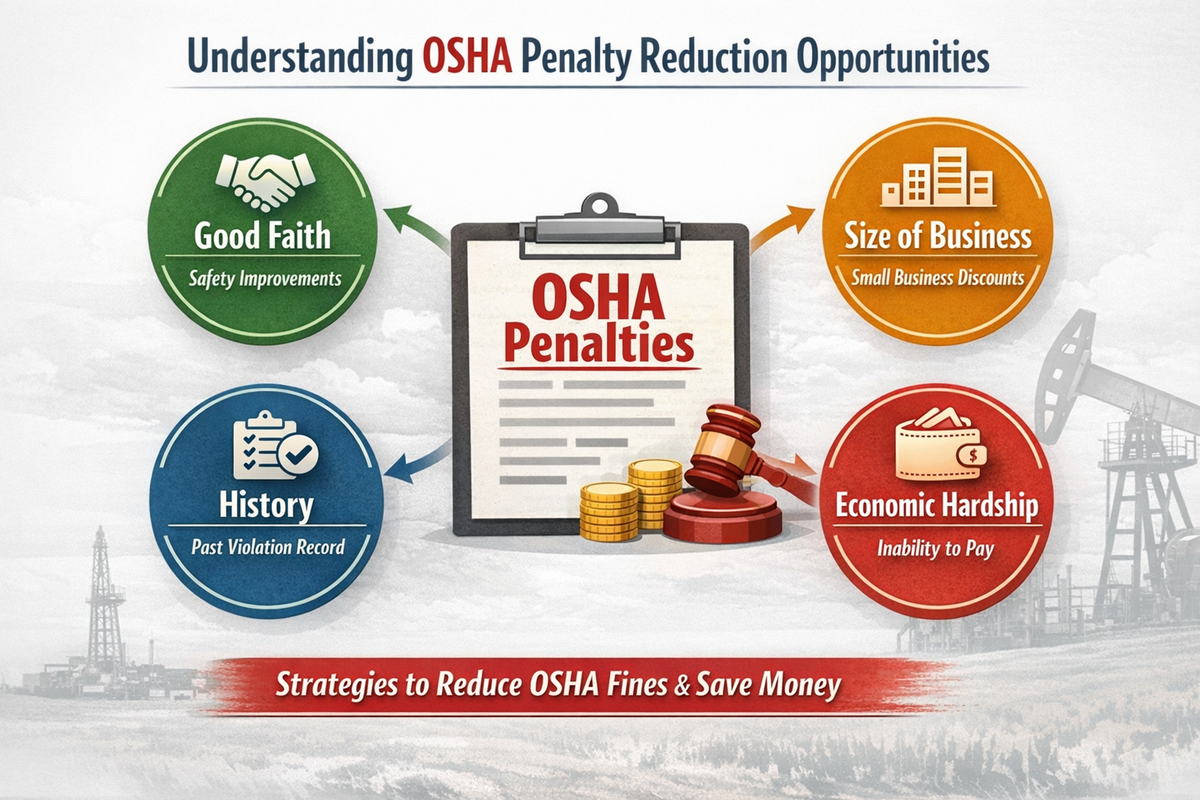
In July 2025, OSHA updated its penalty structure specifically to ease the burden on smaller employers.
What Actually Changed
The U.S. Department of Labor updated its guidance on penalty and debt collection procedures to minimize the burden on small businesses and increase prompt hazard abatement. The specifics matter for contractors:
Bigger penalty reductions for smaller operations: A 70% penalty reduction, which was previously only applicable for businesses with 10 or fewer employees, will now be expanded to include businesses who employ up to 25 employees. If you've got a crew of 15-25 people, you now get the same penalty relief as the smallest operators.
Quick fixes get rewarded: The revisions include new guidelines for a 15% penalty reduction for employers who immediately take steps to address or correct a hazard. If you catch something and fix it within OSHA's timelines (right away for violations such as adjustment of a machine guard) or within 5 days for more complex abatement then you are able to claim that 15% reduction.
Clean history counts: Employers who have never been inspected by federal OSHA or an OSHA State Plan, as well as employers who have been inspected in the previous five years and had no serious, willful, or failure-to-abate violations, are also eligible for a 20% penalty reduction.
Why This Matters for Drilling Contractors
Small drilling contractors face the same hazards as major operators—pressure testing, BOP operations, rig floor work. The difference is you're managing that risk with a fraction of the budget. You can't afford a full-time compliance person. You can't afford to shut down for days implementing new procedures.
The penalty reductions give you real breathing room. If an inspector finds something and you move immediately to fix it, OSHA's giving you credit for that. If you've got a clean record, you're not being penalized the same way as an operator with a history of violations.
What This Doesn't Change
Here's what matters: these penalty adjustments do not reduce your actual safety obligations. You still have to meet OSHA standards. You still have to maintain your equipment, train your crew, and document everything. The penalties are just lower if you're small and responsive.
What You Should Do Now
If you haven't had an OSHA inspection, you qualify for that 20% reduction automatically. If you have been inspected in the last five years and stayed clean, same thing.
Start documenting your safety protocols. Keep records of equipment maintenance, crew training, and hazard assessments. When—not if—something needs addressing, document that you fixed it immediately. That 15% reduction is earned by demonstrating fast action.
And if you're running multiple sites, make sure each location has someone who understands your safety procedures. That person becomes your on-site credibility with regulators.
The rules haven't gotten softer. They've gotten fairer for people running tight operations the right way.