H2S Detection Reality Check: Why Your Monitor Might Not Save You
In October 2019, a pumper at the Aghorn Operating waterflood station in Odessa, Texas was fatally injured by hydrogen sulfide (H2S) exposure while responding to a pump malfunction. The U.S. Chemical Safety Board (CSB) investigation found that the facility's H2S detection and alarm system was nonfunctional at the time of the incident, and the worker was not wearing a personal H2S monitor. His spouse, who entered the unlocked facility looking for him later that evening, was also fatally injured. The CSB identified nonuse of personal detection equipment as one of six critical safety failures at the site.
That investigation highlights a broader problem across production operations: crews rely on detection equipment without understanding its limitations.
Three Ways Your H2S Monitor Can Fail You
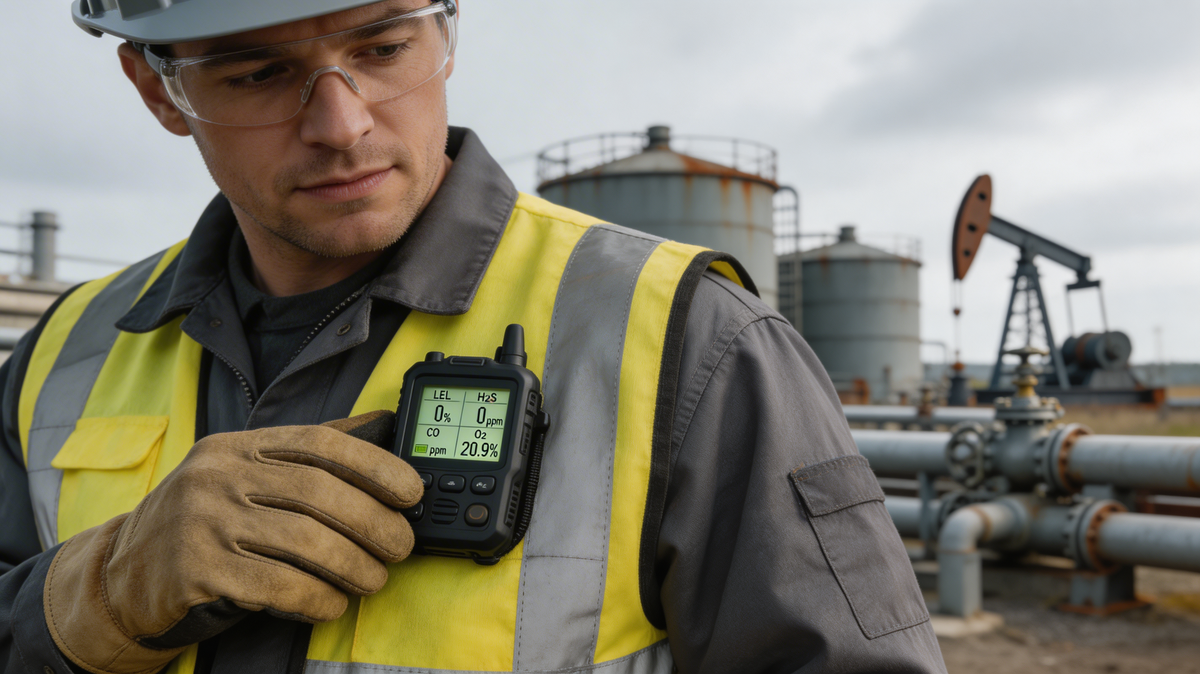
Calibration drift. Electrochemical H2S sensors degrade over time. Manufacturers report a typical drift of 2% to 5% per month under normal conditions. Exposure to extreme temperatures, high humidity, corrosive gases, or solvent vapors accelerates that degradation. The Occupational Safety and Health Administration (OSHA) requires that air monitoring be conducted by a qualified person, but the standard does not specify a universal calibration frequency. Follow the manufacturer's recommended schedule and bump test at the start of every shift.
Cross-sensitivity. H2S sensors respond to gases other than hydrogen sulfide. The degree of interference depends on electrode material, sensor age, operating temperature, and humidity. In mixed-gas environments common to oil and gas production, a sensor may show a false reading influenced by sulfur dioxide, carbon monoxide, or other compounds. A bump test confirms the sensor responds to the target gas, but it does not verify accuracy in the presence of interferents.
Environmental conditions. Electrochemical sensors are rated for specific temperature and humidity ranges, typically 15% to 90% relative humidity in non-condensing conditions. Condensing moisture blocks the gas diffusion pathway and suppresses readings. Cold weather slows sensor response time, and high heat accelerates chemical degradation.
Reading the Environment Without Your Monitor
OSHA sets the H2S Permissible Exposure Limit (PEL) at 20 parts per million (ppm) as a ceiling concentration. Health effects, including nausea, eye irritation, and headaches, can begin at prolonged exposures as low as 2 to 5 ppm. At 100 ppm, H2S paralyzes the olfactory nerve, eliminating the ability to smell the gas. Relying on odor detection at any concentration is unreliable.
What crews can watch for: coworkers showing sudden dizziness, confusion, or loss of coordination. Dead vegetation or dead insects near equipment. Discolored or corroded metal fittings at connection points. These environmental indicators do not replace monitoring equipment, but they provide early signals when equipment has already failed.
Escape Protocols When Monitors Fail
If a crew member becomes symptomatic or environmental indicators suggest a release, the response is to move crosswind and uphill immediately, account for all personnel, and call emergency services. Do not re-enter the area to retrieve a downed coworker without supplied-air respiratory protection and a rescue plan. The Aghorn incident is a direct example of what happens when untrained or unequipped individuals enter an H2S environment to attempt a rescue.
Every shift should begin with a confirmed rally point and a headcount procedure that does not require anyone to go back inside the hazard zone.
Sources
- U.S. Chemical Safety Board — Aghorn Operating Inc. Waterflood Station Hydrogen Sulfide Release, Final Investigation Report: identified nonfunctional H2S detection system and nonuse of personal monitors as critical safety issues. https://www.csb.gov/aghorn-operating-inc-waterflood-station-hydrogen-sulfide-release-/
- OSHA — Hydrogen Sulfide Standards: H2S PEL of 20 ppm ceiling, with acceptable peak of 50 ppm for 10 minutes per 8-hour shift. https://www.osha.gov/hydrogen-sulfide/standards
- OSHA Safety and Health Information Bulletin — Calibrating and Testing Direct-Reading Portable Gas Monitors: bump test and calibration guidance. https://www.osha.gov/publications/shib093013
- OSHA eTool — Oil and Gas Well Drilling and Servicing, H2S Monitoring: monitoring requirements and health effects at various concentrations. https://www.osha.gov/etools/oil-and-gas/general-safety/h2s-monitoring
- Industrial Scientific — Gas Detector Calibration: sensor drift rates of 2–5% per month and environmental factors affecting accuracy. https://www.indsci.com/en/blog/gas-detector-calibration
- Inspired by: Silent Killer: Hydrogen Sulfide Release in Odessa, Texas (U.S. Chemical Safety Board). https://www.youtube.com/watch?v=jh2HWT8gPeY