Arc Flash SRL Breakthrough: Why the First Class 2 Arc-Rated Self-Retracting Lifeline Changes a Specific Problem — and What It Doesn't Solve
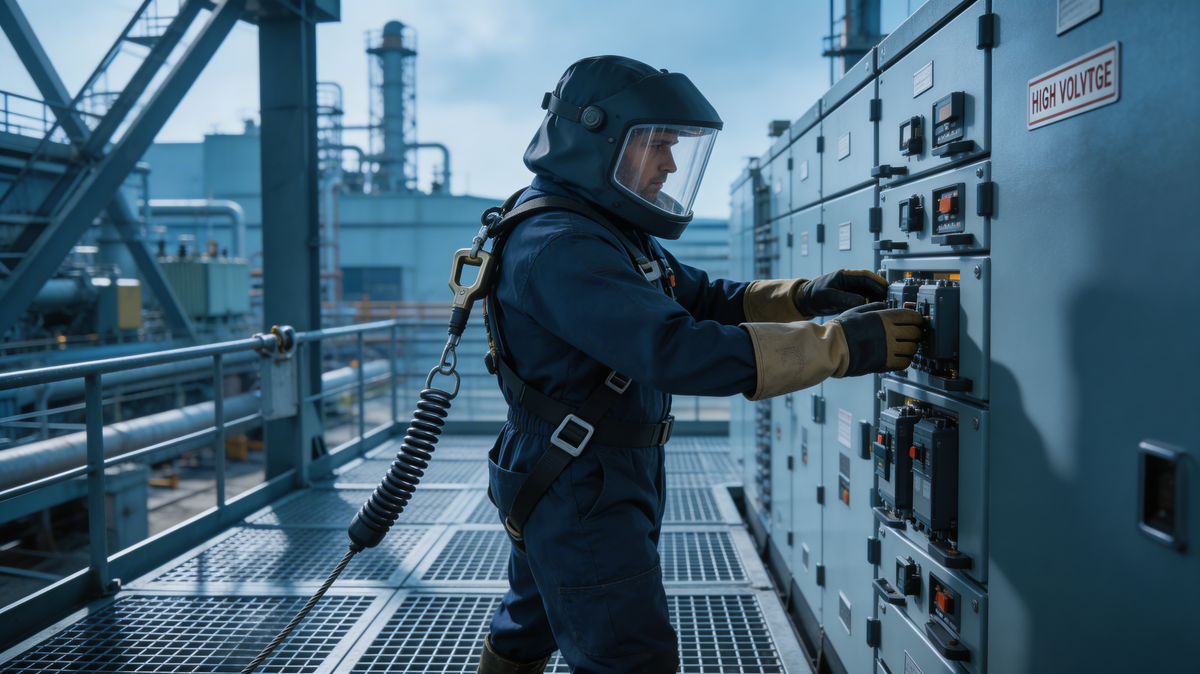
Electrical workers on oil and gas sites operating near energized equipment face two simultaneous compliance requirements: National Fire Protection Association (NFPA) 70E requires arc-rated Personal Protective Equipment (PPE) for energized electrical work, and OSHA requires fall protection on elevated surfaces. Until recently, no single Self-Retracting Lifeline (SRL) satisfied both.
FallTech's FT-X EdgeCore Arc Flash SRL-P is the first device to carry both an arc flash rating and a Class 2 leading edge rating under American National Standards Institute (ANSI) Z359.14-2021. That combination is new so let's take a closer look into what the EdgeCore can really do.
The Actual Problem It Solves
Standard SRL lifelines are made from nylon, polyester, or galvanized steel cable — none arc-rated. In an arc flash event, those materials can burn through. A fall arrest system that fails under arc flash conditions is not fall protection.
The FT-X EdgeCore Arc Flash uses 100% Kevlar lifeline construction with a Kevlar and Nomex energy absorber cover — both inherently flame-resistant materials. It complies with ANSI Z359.14-2021 Class 2, which authorizes anchorage at, above, or up to five feet below the dorsal D-ring and requires the device to be tested for leading edge performance, meaning the lifeline must retain integrity after contact with a sharp structural edge during a fall. Class 1 devices are overhead-anchorage-only and not tested to that standard.
That is a real technical gap this product closes. A Kevlar-lifeline SRL-P rated for below-D-ring anchorage and leading edge exposure did not exist in an arc-rated configuration before this unit.
What the Product Pages Don't Tell You
NFPA 70E requires PPE to be selected based on a site-specific arc flash risk assessment that establishes the incident energy level in calories per square centimeter (cal/cm²) at each work location. NFPA 70E's four PPE categories range from a minimum of 4 cal/cm² at Category 1 up to 40 cal/cm² at Category 4. The PPE selected must meet or exceed the incident energy at the worker's position.
FallTech references ASTM (American Society for Testing and Materials) F887 as the testing standard for arc-rated harnesses and lanyards, which uses 40 cal/cm² as the test threshold. However, no publicly available FallTech product page lists the actual Arc Thermal Performance Value (ATPV) — the specific cal/cm² rating of this SRL — in the product specifications. Without that published number, a safety coordinator cannot make a documented PPE selection decision under NFPA 70E. Before specifying this unit, contact FallTech directly for the ATPV data sheet and verify it matches or exceeds the incident energy established by your site's arc flash hazard assessment.
What This SRL Does Not Replace
This device protects the lifeline and energy absorber from arc flash thermal exposure. It does not replace:
- An arc-rated full-body harness — the harness webbing must independently meet arc rating requirements for the task
- Arc-rated clothing, face protection, and insulated gloves required under NFPA 70E
- A site-specific arc flash hazard assessment establishing the incident energy at each work location
- Fall clearance calculations specific to the anchorage configuration — Class 2 below-D-ring anchorage increases free-fall distance and arrest forces; the fall clearance charts included with the unit must be used for each setup
Retirement and Inspection
Any SRL-P exposed to an arc flash event or used to arrest a fall must be removed from service immediately. Neither event leaves a reliable visible indicator of damage. On multi-shift operations, tracking individual unit exposure history requires a serialized inspection and retirement program — something that should be built into the site's PPE management process before these units are deployed.
Where It Applies in Oil and Gas
Variable Frequency Drive (VFD) cabinets, Silicon Controlled Rectifier (SCR) houses, transformer skids, and switchgear on rig and production facility skids present simultaneous arc flash and fall hazards where this technology is relevant. The product addresses a real compliance gap for that specific scenario. The gaps noted above are worth resolving before deployment, not after.
Sources
- FallTech FT-X EdgeCore Arc Flash product page — ANSI Z359.14-2021 Class 2 SRL-P compliance, Kevlar lifeline, 420 lb rating, below-D-ring authorization: https://www.falltech.com/ft-x-edgecore-arc-flash
- FallTech — Arc Flash in Utilities blog, ASTM F887 40 cal/cm² test threshold reference, ANSI Z359 Class 1 vs Class 2 definitions: https://www.falltech.com/blog/fall-protection-guides-resources/arc-flash-in-utilities
- FallTech — ANSI Z359.14-2021 compliance guide, Class 1 vs Class 2 anchorage and leading edge requirements: https://www.falltech.com/blog/industry-news-updates/what-you-should-know-to-comply-with-the-updated-srd-standard
- NFPA 70E PPE Category requirements — 4 cal/cm² (Category 1) through 40 cal/cm² (Category 4) minimums, incident energy analysis method requirement: https://arcflash101.webflow.io/lookup-tables/table-130-7-c-15-c-ppe-by-category
- OSHA — Protecting Employees from Electric-Arc Flash Hazards, arc rating requirements and NFPA 70E alignment: https://www.osha.gov/sites/default/files/publications/OSHA4472.pdf
- Van Meter — ANSI Z359.14-2021 Class 2 leading edge and below-D-ring anchorage requirements: https://www.vanmeterinc.com/blog/ansi-z359.14-2021-fall-protection-standard
- Inspired by: FallTech — FT-X EdgeCore Arc Flash SRL-P product video (YouTube): https://www.youtube.com/watch?v=Sjbm2bgNu8M